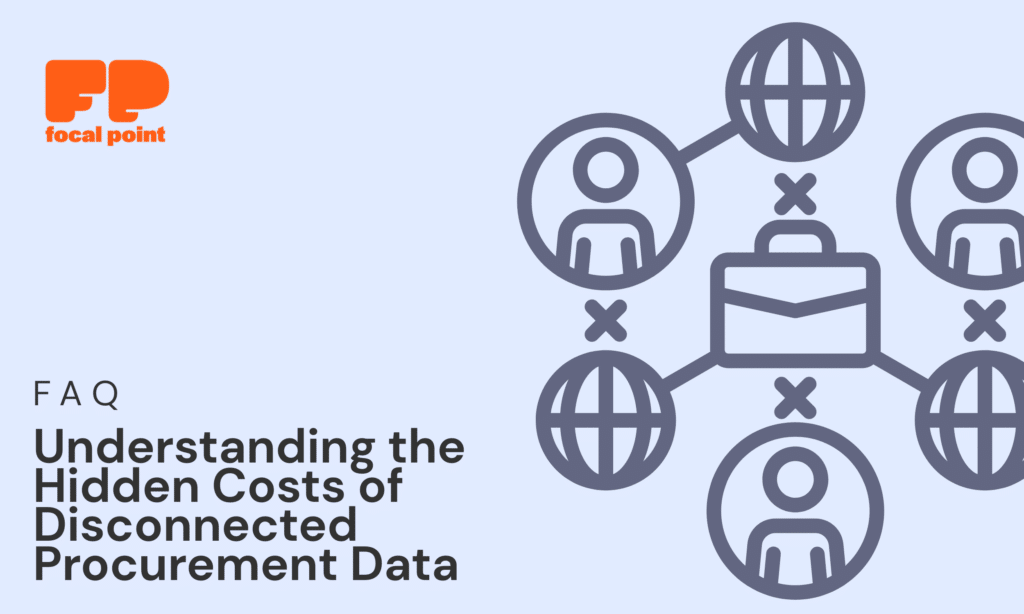
This FAQ outlines why disconnected data and fragmented systems are a core challenge for procurement teams, based on real insights from Anders Lillevik’s experience as a former CPO and founder of Focal Point. It addresses how these issues impact performance, compliance, and decision-making, and what structural changes can reduce inefficiency and risk. All answers reflect verified expertise or documented company materials.
1. Why is disconnected data such a persistent problem in procurement?
Procurement teams often work across intake forms, emails, spreadsheets, contract tools, and ERP systems, most of which aren’t integrated. This leads to duplication, delays, and limited visibility across functions.
2. What are the operational risks of fragmented procurement systems?
Disconnected systems make it difficult to track who is doing what and when. It creates gaps in accountability, delays approvals, and increases the chance of error or non-compliance, particularly when processes touch multiple departments like legal, IT, or finance.
3. How does this fragmentation impact financial performance?
When procurement data isn’t centralized, organizations miss opportunities for cost savings. It becomes harder to optimize spend, identify redundancies, or negotiate based on complete data visibility.
4. How can procurement teams regain lost time caused by disconnected tools?
Organizations that have centralized procurement workflows and data, such as through a single platform, report regaining up to 30% of procurement team time by reducing manual tracking and follow-up.
5. Is AI useful in procurement if data remains siloed?
AI can support intake routing, triage, and process acceleration, but it relies on clean, connected data to be effective. Without integration, AI has limited value and can add complexity rather than reduce it.
6. What role does contract lifecycle visibility play in reducing risk?
When procurement and contract tools don’t share data, teams lose insight into obligations, renewal dates, and approval workflows. Integrating contract management helps prevent compliance gaps and gives legal, finance, and procurement a shared view of risk.
7. What structural change is most impactful for procurement teams today?
Consolidating intake, execution, and performance tracking into a unified interface allows procurement teams to act with context, respond faster, and avoid blind spots across the lifecycle of requests and contracts.
Full episode: Why Disconnected Data is Costing Companies More Than They Know