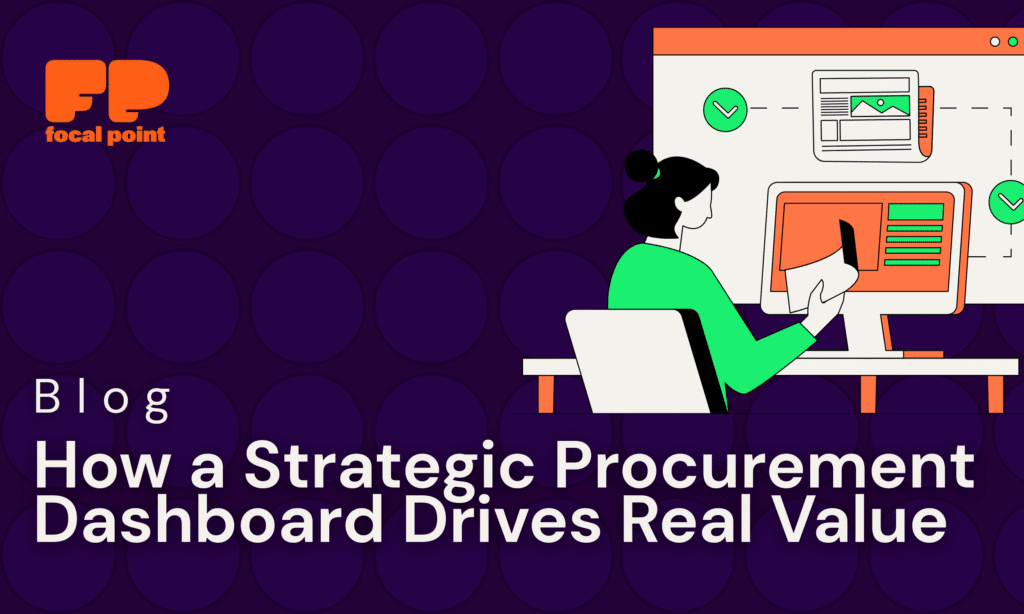
Lots of teams have a procurement dashboard that’s great at reporting things. They show performance metrics, track supplier spend, and offer snapshots of contract activity. But that’s also the problem: most procurement dashboards stop at the surface.
They show what happened, but most don’t help you decide what to do next.
In today’s environment, that’s not enough. Procurement teams need tools that surface real-time insights, flag risk, and drive action. They need dashboards that operate like strategic control centers.
Let’s talk about what a modern procurement dashboard should actually do and how it can drive measurable value across the enterprise.
The Problem with Today’s Procurement Dashboards
Most teams have dashboards, but most of them are filled with visuals that often present stale or siloed data. You might know that 20% of your suppliers fall into a “high-risk” category, but without deeper context, what does that actually mean for your business?
- Which suppliers support critical operations?
- Who’s exposed to regional disruptions or upcoming compliance risks?
- Are any of them tied to contracts set to expire?
Without the ability to dig into the data and connect it to action, dashboards become just another reporting layer.
An AI-Powered Procurement Dashboard Should Be Built for Action
A high-performing procurement dashboard should be able to identify and enable strategic decision making.
Take this example: A major storm is forecasted in Southeast Asia. A traditional dashboard might show your supplier footprint in that region. A modern dashboard flags the suppliers most at risk, triggers alerts to sourcing leads, and recommends steps to mitigate disruption in real time.
The next generation of dashboards must be able transform procurement data into actionable decisions based upon contextual internal and external data.
If your procurement dashboard isn’t helping your team act faster, mitigate risk, and deliver measurable value it’s time to rethink what value it’s actually providing for your organization.
Here’s what a modern, value-driving dashboard should enable:
1. Surface Insights in Real Time
Strategic procurement teams need visibility into what’s happening now, whether it’s a delayed project, a supplier at risk, or a contract bottleneck. Real-time data feeds and alerts are critical for enabling teams to act in real-time to respond to changes.
2. Support Role-Based Views
Procurement stakeholder needs are diverse: your dashboard needs to adapt to each audience. Role-based views help everyone focus on what matters most to them, which makes it easier for procurement to communicate their value.
3. Reveal Team and Project Bottlenecks
Complete visibility means that leadership can easily see what team resources are working on, track which internal stakeholders are holding up approvals and identify sourcing delays before they become issues. Dashboards should help leaders manage resources in addition to reporting on performance.
4. Connect Insights to Action
Seeing a red flag isn’t helpful without the insight and data to follow it up and take action. A strategic procurement dashboard should embed workflows: assign follow-ups, trigger escalations, and close the loop on issues and opportunities.
5. Highlight Innovation, Not Just Risk
Dashboards should use procurement analytics to opportunities for innovation, surface cost-saving opportunities, and explore emerging partnerships. Opportunity is as strategic as risk.
Make Procurement Data Meaningful to the Business
Great dashboards should help procurement teams work smarter and help procurement earn trust. Being able to communicate with business a unit lead and show them every project, contract, supplier relationship, and savings initiative tied to their function should be simple for procurement.
For procurement teams looking to operate at the next level, data alone isn’t enough. You need clarity, contextual data and strategic control.
Ready to transform your procurement dashboard?
Focal Point helps enterprise procurement teams centralize data, automate workflows, and make smarter decisions with real-time visibility across every contract, supplier, and stakeholder.