0:00
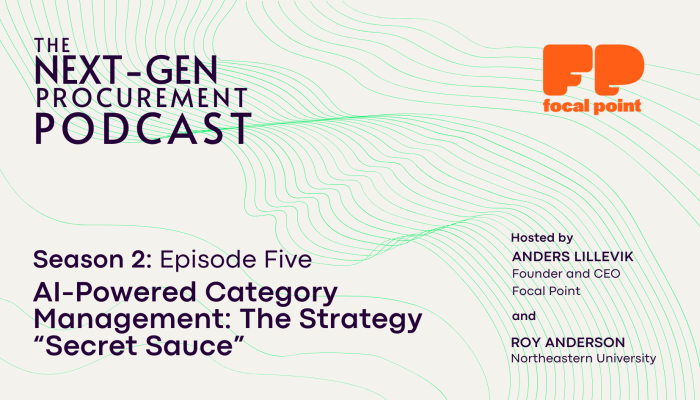
My name is Andrew Slovik. I’m the
0:02
founder of a company called Focal Point.
0:05
Uh if you can drop in the chat where
0:07
you’re joining us from, that would be
0:09
fantastic. Uh I’m myself and I’m in
0:11
Atlanta where uh our offices are. And
0:14
Roy, where are you calling in from?
0:16
I’m calling in from Sandwich,
0:17
Massachusetts, right here in Cape Cod.
0:19
Fantastic. Sounds sounds glorious. I’m
0:21
sure it’s great. So today we’re
0:24
basically going to talk about a topic
0:26
that is a bit more I would say
0:29
educational and more applicable to sort
0:32
of everyday procurement and it’s all
0:35
around how to best effectively utilize
0:38
AI to do stuff within procurement and
0:42
Roy how much are we talking about this
0:44
in your classes today or is this all you
0:46
guys talked about? Oh, in in uh Nor
0:48
Eastern has done a significant push to
0:51
make AI central to how we train and how
0:54
we um grow the students into this new
0:57
environment and it is growing at a
1:00
incredibly fast rate. So for my classes,
1:02
I do a sourcing and negotiation class as
1:04
one of the the courses. It is entirely
1:07
AIdriven. So I have AI as a requirement
1:10
in every single report and analysis they
1:13
do. I use the technologies including
1:15
focal point um and the AI engines that
1:18
are driven that so that the students can
1:20
see how a source pay solution set looks
1:23
how it’s built up how the category
1:25
strategies are utilized uh one of the
1:28
examples I use is I asked Claude uh to
1:32
uh you know do a a category strategy for
1:37
sourcing element on lithium and I’ve
1:38
never worked lithium I’m not sure all
1:40
the I know it’s a big issue the result
1:42
is better than anything I’ve seen from
1:44
any of my best sourcing managers in my
1:46
career. And I go, “Okay, folks, this is
1:49
a B minus grade. This is your baseline.
1:52
Now, what are you going to do above and
1:53
beyond that uh to create the value
1:56
proposition for people to be able to use
1:57
you?” So, it was a wakeup call to just
2:00
how good the AI engines have have
2:02
become.
2:03
Okay. And you talked a little bit about
2:06
data, right? So, lithium obviously is a
2:08
very I mean, it’s narrow, but it’s also
2:09
very vague, right? So yeah,
2:11
how and the whole thing about contextual
2:14
data is is really what we’re going to
2:15
talk a lot about today and how important
2:17
it is to sort of give
2:19
the right inputs into the large language
2:21
models in order for them to give you
2:23
good outputs and then you should be able
2:25
to do something about it or with the
2:26
stuff you have there. Right? So I think
2:29
maybe we can dive right into topic
2:31
number one
2:32
which is what does contextual data
2:35
actually mean? And Roy, do you want to
2:37
take a crack at crack?
2:38
Yeah, let me let me give it a start. You
2:40
know, I I wasn’t I didn’t think we were
2:41
going to go into lithium, but obviously
2:43
that’s the example. So, let’s me let me
2:45
use that example. Uh, seven years ago,
2:48
10 years ago, lithium would only be
2:51
talked about in terms of how much
2:52
lithium we’re using in laptops or or
2:55
maybe in our cell phones where they’re
2:56
using a lithium battery. But obviously
2:59
lithium today is a massive undertaking
3:03
where there’s enormous investment
3:05
because of the lithium that’s being
3:07
utilized not only in the solar the home
3:09
solar market with all the lithium
3:11
batteries as backup but of course the
3:13
EVs which are just filled with um what
3:17
50und 500 pounds of lithium uh or
3:20
lithium not all lithium but 500 pound
3:24
batteries of which lithium is a part of.
3:26
uh so therefore the context of just a
3:28
few years difference changes the entire
3:31
demand requirement the entire supply uh
3:34
expectations. So you have to understand
3:36
you know where are you in this
3:38
discussion what is happening in the
3:40
marketplace how are we um going to be
3:43
utilizing this in the future and then
3:45
what new technologies because that’s
3:46
going to be a part of every contextual
3:48
discussion is well with this new
3:50
investment was going to come new
3:52
technologies new technologies literally
3:54
could make lithium irrelevant two years
3:57
later as hydrogen comes in so I mean the
3:59
the relevance of contextual data the now
4:02
what’s around it what are all the
4:04
elements of it is vitally important in
4:06
the sourcing manager point of view
4:08
and I tend to look at it first of all
4:10
that’s a great answer right and I think
4:13
uh that’s a lot of the market context
4:15
but as procurement people I sort of tend
4:17
to look at it as you know what is the
4:20
organization that is making the
4:22
acquisition so first of all who are we
4:25
to sort of say uh you know we’re a
4:27
retail bank with presence in these
4:29
states regulated by the OC
4:31
right and uh and now you know you would
4:34
Okay. And I’m buying janitorial services
4:36
in these states and my my spend in the
4:40
categories X and my uh top three
4:43
suppliers are these three. Now give me
4:47
my Porter analysis whatever the case may
4:49
be. So you know not only do you want to
4:50
look at the context of the category
4:52
itself but also how you position
4:54
yourself within that category.
4:56
Oh absolutely. And and I think you know
4:58
it goes without saying right but it’s
4:59
it’s it’s increasingly invaluable to
5:02
sort of have that contextual data and
5:04
feed the large language model with that
5:06
information rather than instructing it
5:09
to go in a certain way depending on the
5:11
answers it gives you.
5:13
Um
5:14
and of course I think a bunch of of
5:16
supply chain students might not
5:17
necessarily appreciate the complexity of
5:19
that until they get into it.
5:20
Not yet. But they they are uh being made
5:23
more aware of it. And the fun part about
5:25
Nor Eastern is they have a co-op. So the
5:28
students go off after their second year
5:29
and spend six months inside a
5:31
procurement function and then they come
5:33
back and try to tell me all the things
5:35
that uh they have learned and uh where
5:38
we’re at. And unfortunately many
5:39
procurement functions are still
5:41
challenged. They’re not taking advantage
5:42
of these. They still haven’t digitized
5:45
their entire u organization. So
5:49
digitization is got to be required and
5:51
then with that digital data they can
5:53
actually start to use the AI engines
5:55
more effectively.
5:56
Couldn’t possibly agree more. Uh and
5:58
maybe move on to topic two and I think
6:02
as we were at writing these questions
6:04
down like we’re kind of gone a little
6:05
bit into this topic but I think maybe we
6:07
think about
6:09
you know the difference between using a
6:12
large language model without the right
6:14
context versus having all the context
6:16
there for you. What what differences do
6:19
you see?
6:22
What differences do I see in terms of,
6:25
you know, I guess what I’m trying to say
6:27
here is there’s a lot of organizations
6:29
out there today who have generic what I
6:31
would call generic AI capabilities.
6:34
Sure.
6:35
And they sort of say, give me a porter
6:37
analysis and then you know that it’s
6:39
it’s I’m sure it’s fine, but it’s
6:41
generic. So, you know, if you want to
6:44
compare the two of them side by side,
6:46
look, what are the main differentiators
6:48
that you would see
6:49
uh between the the the
6:52
digitized future organizations that are
6:55
driving this activity? Uh right th those
6:58
organizations have literally step by
7:01
step taken each of the transactional
7:04
activities which again most of the
7:06
transactions in those organizations have
7:08
already been moved out. They’ve been
7:09
outsourced. the technology is doing the
7:12
work. But even in the next generation of
7:14
deep dive sourcing activity uh the the
7:18
surface level review uh that uh
7:21
underperforming organizations are doing
7:23
uh is is uh simplistic uh not
7:27
informative uh doesn’t allow them to
7:29
make better decisions. Whereas a a
7:32
leader in this space understands all the
7:34
elements associated with um the
7:37
marketplace. what type of new suppliers
7:39
are coming in what I mentioned before
7:41
new technology I am top of mind as the
7:44
technology is changing so rapidly and AI
7:47
is helping to design the next generation
7:49
of technology improvements and then now
7:52
you’re getting deeper into not only the
7:54
supplier but this is get the individuals
7:56
I’m starting to talk to now they’re
7:57
talking to their second tier suppliers
7:59
their supplier supplier because those
8:02
are the individuals that are feeding
8:03
your suppliers they’re getting that
8:04
innovation coming in they’re looking at
8:07
at how materials are being uh not only
8:09
produced but uh uh improved upon going
8:13
forward. So as you get deeper into your
8:15
supply base and get into the second and
8:17
third tier, you start to realize there’s
8:19
opportunities that one you manually
8:22
humans cannot cover that amount of data.
8:25
They’re going to need AI to be able to
8:27
synthesize the data, understand the
8:29
impact of it, and then be able to uh
8:32
list out the the highest priority
8:35
actions that need to be taken uh and
8:37
therefore be predictive in terms of how
8:39
risk management is going to be met
8:42
because the risk is not necessarily in
8:43
your first tier supplier. It is deep
8:45
down in that supply chain that’s causing
8:48
the biggest risks for your organization.
8:51
I believe that 100%. And as you talk
8:53
about, you know, the example I like to
8:55
give having a generic AI agent versus a
8:59
contextually driven AI agent is if you
9:02
think about buying market data reports,
9:04
right? And I I read a market data report
9:07
once and I I was kind of laughing at it
9:08
because they talked about steel and it
9:12
was a market data report about steel and
9:14
basically what the report was telling me
9:17
was that the uh the steel industry is a
9:20
sellers market. meaning that there is
9:22
not a lot of uh leverage by the buyers.
9:27
And I kept thinking that’s probably not
9:29
true because not all not all steel
9:31
buyers are the same. So if you’re
9:32
General Motors or Ford Motor Company,
9:34
I’m sure you buy a lot of steel. Maybe
9:36
that’s not the best example, but I’m
9:38
sure the bi not all buyers are the same.
9:40
So if you sort of threw in, you know, we
9:42
buy a billion dollars worth of steel per
9:45
year, I’m sure that would change
9:46
dramatically as you as you percentage of
9:48
your market share is growing up. And I
9:50
think that is sort of what I was
9:52
thinking about as you sort of feed the
9:55
large language model better information,
9:57
better data for them to actually think
9:59
about it. Um, but I also think too that
10:02
how the large language model queries are
10:04
written also makes a huge difference in
10:07
the quality of the outcome that that
10:09
you’re going to get. Um,
10:12
anything else to add to this before we
10:14
move on to topic three? Yeah, I I
10:16
anticipate that the um the real users of
10:22
this technology that are that are
10:24
stretching the boundaries of what’s
10:26
possible are going to open up new realms
10:30
of u thought leadership. So they’re
10:33
going to be able to not only have a
10:34
better understanding of the supplier and
10:37
their supply chain, but the marketplace
10:40
around that supplier, all of their
10:42
activity of what they’re doing. And then
10:44
as I mentioned before the predictive
10:45
risk ma management is going to be that
10:48
much more relevant and a part of the
10:50
negotiation. I’m not sure about your
10:52
history but I mean we just barely
10:55
touched the risk levels uh in you know
10:58
in the 2010s and and uh uh uh late
11:01
2010s. And now the risk uh discussion
11:05
the whole COVID thing woke everyone up.
11:07
Says hey this these are real issues. We
11:10
can shut down because of risk problems.
11:12
They’re going to start to be able to
11:14
bring risk into the negotiation and be
11:16
able to actually have actionable uh
11:19
insights and uh plans built with your
11:22
supply base to make sure that you have a
11:24
not only a competitive environment, but
11:26
that you have an optimal environment
11:28
that’s driving technology and also
11:30
mitigating risk. And I actually think
11:33
that’s not going to be an increasing
11:34
cost structure, that’s going to be a
11:36
decreasing cost structure uh as you work
11:38
through that process. So the people that
11:39
say, “Oh, risk management is going to be
11:41
added cost.” I actually think it’s going
11:43
to create innovation. It’s going to
11:44
lower cost.
11:45
Well, and I also think it’s going to be
11:46
providing a lot more value, right? Much
11:49
more bang for your buck. So I think now
11:51
you can write agents to go out and
11:54
figure out what’s the negative news uh
11:56
of this supplier in the last six months.
11:59
What cyber activities or what what you
12:01
know dark web activities have there
12:02
been? And these are these are services
12:04
that that you know people used to buy,
12:06
right? And now you can sort schedule
12:08
that on a large language model and do it
12:11
you know next to nothing. And the other
12:14
thing the other cool thing is you know
12:15
as we are continuing to sort of dive
12:18
into supplier management now we have
12:20
built agents to figure out number one
12:23
how do you enrich the the data of the
12:25
suppliers that you have? Number two how
12:27
do you find out which suppliers they
12:29
have and then you can also do uh figure
12:32
out where they have sites and so on. And
12:34
then you can figure out geog geography
12:36
risk uh without having to do a lot of
12:39
work around it and all of a sudden you
12:40
have something that is much more
12:41
expansive and valuable without putting
12:44
in a ton of elbow grease. Now you
12:46
probably still should validate that the
12:48
information is correct
12:49
of course
12:50
right as as anybody should but it
12:52
certainly is a very good baseline
12:54
without having to chase you know all
12:55
your suppliers down for this
12:57
information.
12:58
Um so we touched on this before on topic
13:01
number three Maya is how can procurement
13:04
utilize actionable insights generated by
13:07
AI and and what you know my pet peeve
13:09
here is when I talk to people and
13:12
there’s like well we can write you know
13:13
we can write a large language model to
13:15
build a strategy pro you probably can
13:18
how do you then make that actionable and
13:20
so you can actually do something with
13:21
that stuff and I think that’s what a lot
13:23
of us are struggling with
13:25
yeah there I mean obviously the amount
13:27
of data and and uh that’s now being
13:29
brought together is going to give you a
13:31
more refined uh understanding of the of
13:34
the environment. But it still requires
13:36
individuals to understand their their
13:39
company’s direction. Where are we
13:41
building and growing? Uh where are we
13:43
expanding our our footprint for products
13:46
and services that are are there? And
13:48
then what suppliers are we going to need
13:50
uh as we expand and build out uh from
13:53
the internal you know the internal
13:54
growth perspective. Um but we are also
13:57
looking to understand u how do you
14:01
optimize each and every one of the
14:02
current contracts as you know uh the
14:05
number of people you have in your uh
14:08
portfolio headcount for the sourcing
14:10
manager never seems to go up. It always
14:12
seems it’s like can you get more done
14:14
for with less people uh and now but the
14:18
expectations of being able to get a a
14:20
better result a wider perspective more
14:23
indepth understanding is absolutely
14:26
going to require us to utilize AI
14:29
engines uh in order to be able to
14:32
highlight problems. So actionable is to
14:35
be able to have a clear list of actions
14:39
that not only you take how many actions
14:42
your supplier has to take and then the
14:44
AI engine making sure those actions are
14:46
being taken and then uh provide the next
14:48
generation. The the idea is the amount
14:52
of iteration that can happen within an
14:54
AI engine to make sure that things keep
14:56
moving forward and that problems can get
14:58
highlighted and and decisions made more
15:01
effectively uh is going to be a real
15:03
change in the current sourcing managers
15:05
portfolio and
15:06
I think this is where technology also
15:09
comes in significantly right the idea of
15:11
orchestration
15:13
with an addition of AI. So you have we
15:16
have data, we have orchestration, now
15:18
you have AI and let’s say that one of
15:21
the actionable insights are you know you
15:24
need to do X Y and Z task or now you
15:26
should look at this do dynamically
15:28
create a task in the solution to say all
15:29
right go do that now so that it’s not
15:32
sort of just something hanging out there
15:33
that someone has to now write an email
15:34
and copy and paste it in um because it’s
15:37
it you know kind of like back to Excel
15:39
almost right so you got all this great
15:41
insight and now you have to execute it
15:42
using Excel it kind of doesn’t jive like
15:45
that.
15:46
Yeah, you’re going to have some real
15:48
issues in the fact that AI engines can,
15:51
you know, I used to really focus on the
15:53
top 20 80% of my spend, 90% of my spend,
15:56
which was literally four to 10% of my uh
16:00
uh supplier base. Um, but now we can
16:03
reach out to a much deeper uh number of
16:06
suppliers that could impact the
16:07
organization. And of course as we get to
16:09
second tier that just expands the number
16:11
of suppliers that you can uh do the
16:14
analysis for. The question is as you get
16:16
and send out requirements or or actually
16:19
have the AI engine find the answers to
16:22
to those uh requirements. Uh how do you
16:26
how do you gather the data without using
16:28
AI engines that are actually going to
16:30
then take action on those requirements?
16:32
Uh and then if in fact the supplier has
16:35
to feed back. Uh, I remember early on in
16:38
the technology structure, every supplier
16:41
was being asked by every one of their
16:42
customers to be able to log into a new
16:45
sourcing tool or a new procurement tool
16:47
or a new website. And they were just
16:49
like, “Time out. We don’t have the
16:51
people to be able to handle this.” So,
16:52
what are they going to do? They’re going
16:53
to start having AI engines that are
16:55
going to respond back to us. And there’s
16:57
there’s this whole concept that AI
16:59
engines are talking and acting with AI
17:00
engines and um can be incredibly
17:03
dynamic. uh we’re going to need to be
17:05
able to put in the flags in the post to
17:07
be able to make sure that we are still
17:09
accurate, that things are being checked
17:11
effectively, that we are uh not driving
17:14
just more work, but more value out of
17:16
this process. And that’s actually going
17:18
to be a significant effort on everyone’s
17:21
part to understand where you’re just
17:22
spinning out of control with data and
17:24
when you’re actually using data more
17:26
effectively.
17:27
Yep, 100%.
17:29
So uh let’s move on to topic four and
17:32
this is going to be a little bit of show
17:33
and tell and you know I wanted to sort
17:36
of touch on this because
17:38
as we start thinking about how people
17:40
are applying this in real life and in
17:42
real term I wanted to share a an example
17:46
about how context can provide
17:49
information into um an agent model and
17:53
then provide an actual a valuable
17:55
output. And rather than giving a demo,
17:57
I’m going to talk about how we would
17:59
create for example a category
18:00
assessment.
18:02
And we talked a little bit about this to
18:04
begin with. But essentially what we want
18:08
to do is you want to feed the AI engine
18:11
first of all context about the
18:13
organization who is buying.
18:15
And obviously
18:18
the industry matters, the size of the
18:20
organization matters, the revenue
18:22
matters, where the for the supplier is
18:24
matters, who they’re regulated by
18:26
matters.
18:28
You know, there are so many things that
18:30
matters that will provide context to the
18:32
AI engine. In addition to that, you
18:35
would do what I would call as you’re
18:37
building a category strategy, you also
18:39
want to feed it internal category
18:41
information such as spend overview like
18:44
how much money you’re spending, uh how
18:46
long is the tail of the spend, when are
18:48
the big contracts up for renewal, who
18:51
are your existing suppliers today, maybe
18:53
even their subsup suppliers, and then
18:55
others information about the spend such
18:57
as usage, top 10 SKUs, whatever the case
19:00
may be. And I think again it takes a
19:03
long time to gather all this information
19:05
unless you actually have it um within um
19:08
the organization or within the solution
19:10
that you’re trying to to do. Um how do
19:13
you guys do this in terms of of doing
19:15
this at the school or is this sort of
19:19
next level for you guys
19:20
in terms of the in in the classroom or
19:22
into actual the procurement function at
19:24
Nor Eastern?
19:25
No, in the classroom of course.
19:26
Okay, good. uh uh in the classroom uh
19:30
you know the the deep dive we’re trying
19:32
to do is in terms of category strategy
19:34
uh one of the areas that I believe that
19:36
I’m missing and it’s painful is the fact
19:38
that I can’t have the students reach in
19:41
and actually have this same learning
19:43
experience with the internal customers.
19:46
So I’m using in actuality Northeastern
19:48
spend data to be able to show reality.
19:51
You know what the what are the
19:52
interesting things that a university
19:54
buys so they can actually determine
19:56
facilities management or cafeteria
19:58
services or consulting or temp labor or
20:01
fac of course building and construction
20:02
and those things. But one of the things
20:05
uh two areas we we know our current
20:07
suppliers is to be able to do a search
20:09
for new suppliers. who’s the newest uh
20:12
entrance in this marketplace that we
20:14
wouldn’t have been able to know because
20:16
they just don’t have enough sales
20:17
people, marketing uh power to be able to
20:20
get uh known. We want to find those
20:23
niche players that can add a new
20:24
solution set. But actually, I think we
20:26
spend a lot of time looking outside, but
20:30
we actually need to do more looking of
20:32
what’s going on inside. You know, hey
20:34
internal customers, I need to know you
20:35
better. I need to understand what your
20:37
requirements are not only today but over
20:39
the next 18 to 24 months so that I can
20:42
provide the supplier portfolio that’s
20:45
going to optimize your results and then
20:47
I can introduce to them to you versus
20:50
you know throwing them on top of you at
20:51
the last minute but have an introduction
20:53
process have them get to know who you
20:55
are so that the the change management
20:57
process which I believe is incredibly
21:00
important um goes smoothly and
21:03
effectively in terms of the internal
21:05
customers knowing what’s happening, why
21:06
it’s happening, feeling comfortable of
21:08
the changes that you’re proposing.
21:11
Yep. 100%. And then with all this
21:14
contextual data fed into the law of
21:16
language models, what comes out on the
21:18
other side of that is really the output
21:22
of a category analysis. Now, this is
21:25
some of the stuff that that we have
21:26
developed. So, as you’re doing a
21:28
category strategy within focal point,
21:31
the first thing you would get is a fi
21:33
forest five forces model. Obviously you
21:35
will have a lot of information and
21:36
scoring within these things. You will
21:38
have a pestle analysis for example if if
21:42
the regulatory environment is is pretty
21:44
stiff then you have to have to figure
21:46
out like what what is the um impact of
21:49
that acic analysis to figure out where
21:51
this sits in in in your importance and
21:55
additional things like alternative
21:56
suppliers category cost driver switching
21:59
cost and switching barriers like all
22:01
these kinds of things. And I think this
22:03
is when a lot of these things become
22:06
come to life because they’re tailored to
22:08
you and and your category and your
22:10
organization and it’s not a generic
22:12
thing that that things are throwing out,
22:15
you know, that that is that they can
22:16
resell to everybody else. And I think
22:18
this makes a big difference between the
22:20
data providers of of yester year where
22:23
they write a report and they sell 10,000
22:25
copies of it
22:27
because you know now using the proper
22:29
inputs you can actually get things that
22:31
are customized to you.
22:33
Um comments
22:35
yeah I like it. Um one of the areas the
22:38
next in order to take this into the
22:41
sourcing effort into the RFP discussion
22:44
is how do you ask the right question to
22:46
the suppliers. So that the relevant
22:49
information is coming back to you. The
22:51
the the criteria that is deciding
22:55
factors as to which suppliers you want
22:57
to you want to put your uh time and
22:59
effort into. Um and I’ve been really
23:02
pushing with the the students and with
23:05
the people that I talk to in industry is
23:07
the fact that uh the future of the
23:10
supply chain is innovation. And you need
23:13
those robust, strong, innovative uh
23:18
solutions. And therefore, a good part of
23:20
your questioning has to be is is the
23:22
methodology they use to drive innovation
23:24
within their category. And I think your
23:27
structure here aligns with the fact that
23:29
that you understand what are the uh
23:32
criteria that’s going to be impactful.
23:34
Now, how do you find the supplier that
23:36
matches those innovative criteria most
23:38
effectively? And obviously too like what
23:40
what we do within with our solution is
23:43
we take the internal landscape that you
23:44
already have and mirror that with the
23:46
external landscape that we just
23:48
visualized here and now saying okay what
23:50
are the you know what are the suitable
23:52
drivers that you that you can use in
23:54
order to achieve your objectives right
23:56
and and obviously if the objective is to
23:59
save money or reduce risk or in increase
24:02
innovation or decrease cycle time like
24:03
it could be a variety of things
24:05
depending on the category that will then
24:07
drive the actual
24:10
recommendations to say okay you should
24:11
soul source this you should extend your
24:13
contract terms you should collaborate
24:15
like all those kinds of things so gone
24:17
are the days I think of using an RFP as
24:19
a blunt instrument for everything right
24:22
because you have to treat strategic
24:24
relationships differently than you do a
24:26
you know a a commodity so
24:29
that’s that’s really you know where I
24:31
think things are going now and you know
24:34
doing these six analyses that are here
24:37
for example would take a sourcing team
24:39
manually like weeks to do and and this
24:43
gets done in in a matter of of a minute
24:45
or two depending on how we stack the
24:47
queries. Um which is it’s it’s pretty
24:50
cool.
24:51
Yeah, I I love it. And when you bring in
24:54
u of course you want to optimize your
24:55
current suppliers. Uh, but I’ve gotten
24:58
the majority of my value proposition has
25:01
always been able to find that next
25:02
supplier that’s coming in with that new
25:04
item that could ve very well take three
25:06
to five years to actually get it
25:07
integrated into your structure into your
25:10
strategy into your product or service
25:12
mix. But it is that constant uh
25:15
surveying of the global marketplace for
25:17
suppliers that are doing breakthrough
25:19
work that’s going to keep you on the
25:21
cutting edge as a company and a value
25:24
proposition as a as a sourcing uh arm of
25:28
your organization.
25:30
So uh kids I think this is the last uh
25:33
uh content slide uh today. So uh the
25:37
other news that we wanted to share is
25:39
we’re going to continue on uh these
25:41
these sessions into next year. Roy and I
25:44
will make this a a regular recurring
25:46
thing. So is is going to be um you know
25:50
announced in in the next few next little
25:52
while. So uh if you want to subscribe to
25:55
season 2 there is obviously the QR code
25:57
on the screen but also hit us up on
26:00
LinkedIn. We always want to nerd out
26:02
about procurement, talk about
26:03
technology, not just uh it could be
26:06
sourcing, supplier management, category
26:08
management, like Roy and I have kind of
26:09
been through the ringer. Uh and and we
26:11
have the gray hair to to prove it. At
26:13
least I do or less less and less of it.
26:15
But anyway, um so thanks thanks a lot
26:18
for joining us, guys. Roy, always a
26:19
pleasure. Thank you so much for your
26:21
time.
26:21
Thank you, Anders. Look forward to the
26:23
next season. All right. Cheers.